- calendar_today August 14, 2025
Manitoba’s real estate market in 2025 is navigating a climate of cautious optimism. Interest rates are stabilizing, but affordability and economic shifts continue to shape investor decisions. Across Winnipeg, Brandon, and other growing communities, buyers and developers are taking a more targeted approach—prioritizing consistent income, local market fundamentals, and alignment with demographic trends.
Where are the smart investments in Manitoba this year? Experts are watching seven real estate sectors that are not only holding their ground but evolving in response to regional needs and economic conditions.
Multifamily Housing: Manitoba’s Rental Backbone
Multifamily properties remain the core of Manitoba’s urban housing market. In Winnipeg, particularly in neighborhoods like St. Vital, West End, and Fort Garry, rental demand remains strong as homeownership remains unaffordable for many.
Class B and C apartments are performing well, with low vacancy rates and modest rent growth in the 2–3% range. Developers in mid-sized cities like Brandon and Selkirk are also exploring build-to-rent housing, which offers stable cash flow and meets the needs of long-term tenants seeking affordability and flexibility.
Industrial Properties: Growth in Logistics & Cold Storage
Manitoba’s central location makes it a strategic hub for logistics and warehousing. Industrial real estate near Winnipeg’s CentrePort and along Highway 75 continues to see healthy demand, especially from companies focused on transportation, distribution, and agricultural exports.
According to CBRE Canada, industrial rents in Winnipeg are up over 5% year-over-year, with vacancy rates dipping below 4%. Cold storage, a key asset in Canada’s agri-food economy, is especially in demand. As e-commerce, cross-border trade, and automation reshape supply chains, Manitoba’s industrial assets are gaining national attention.
Single-Family Rentals in Secondary Cities
Single-family rentals (SFRs) are growing in popularity in Manitoba’s suburban and secondary markets. In areas like Steinbach, Portage la Prairie, and the outskirts of Winnipeg, working families are choosing rental homes over ownership due to higher interest rates and economic uncertainty.
These properties offer investors dependable tenants and relatively low turnover. Roofstock’s 2025 Investor Sentiment Index notes a rising trend in SFR investment across Canada, and Manitoba is no exception. In fast-growing communities with good schools and employment centers, SFRs are providing steady cash flow and appreciation potential.
Migration Patterns Fuel Regional Demand
While Manitoba doesn’t see the dramatic migration shifts found in provinces like Alberta or Ontario, there is a notable trend of population growth in urban fringes and smaller towns. Immigrants and younger Canadians seeking affordability are driving housing demand outside the Winnipeg core.
Places like Winkler, Morden, and Thompson are attracting attention due to industrial development, healthcare investments, and expanding local economies. Developers following these trends are building housing and commercial properties close to new job centers, responding to a quietly shifting demographic map.
Mixed-Use Projects & Revitalized Downtowns
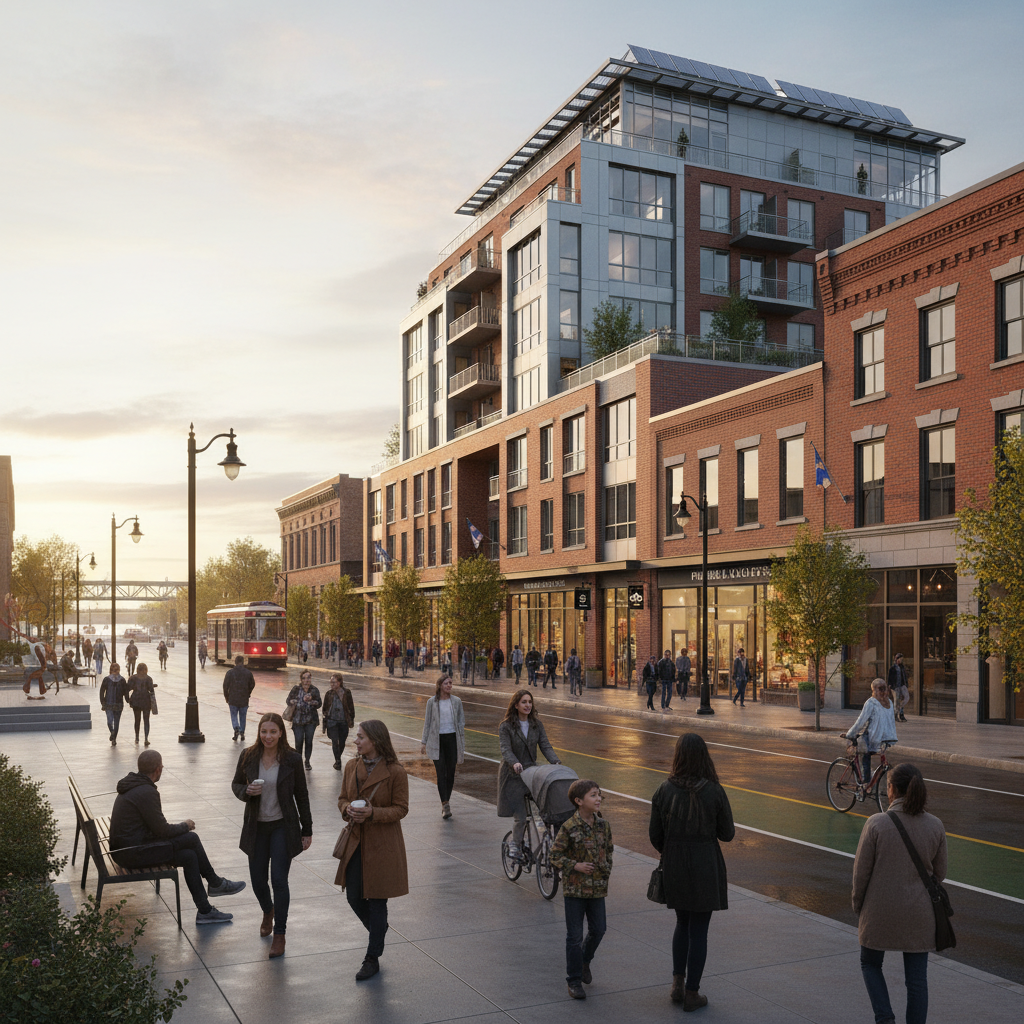
Downtown Winnipeg is experiencing a cautious resurgence, with mixed-use developments blending residential, retail, and office space. The post-pandemic shift in how people live and work has created opportunities to reimagine urban cores as walkable, vibrant districts.
Projects in The Exchange District and along Portage Avenue are tapping into demand from young professionals and students. Outside of Winnipeg, cities like Brandon are exploring downtown revitalization through adaptive reuse projects. Though development timelines can be complex, the long-term value of these multi-functional spaces is attracting investor attention.
Niche Assets Gaining Momentum: Senior & Student Housing
Manitoba’s aging population is driving increased interest in senior living communities, especially in rural areas and mid-sized towns where demand for assisted living, independent living, and memory care is growing. Regional health authorities are expanding infrastructure, creating investment opportunities in adjacent real estate.
Student housing is also regaining momentum, particularly around the University of Manitoba, University of Winnipeg, and Brandon University. Modern, tech-equipped apartments with shared amenities are in high demand. Pre-leasing rates in 2025 are strong, with investors responding by upgrading existing properties or building new student-oriented developments.
Cautions & Risk Considerations for Manitoba Investors
As with all markets, Manitoba’s real estate landscape has risks. Rising insurance premiums—especially in flood-prone areas near rivers—are an increasing cost factor. Additionally, older building stock in Winnipeg requires higher upfront investment for retrofits and maintenance.
Policy uncertainty is another consideration. While Manitoba doesn’t face the same level of rent control scrutiny as some other provinces, housing affordability remains a political issue that could shape future legislation. Prudent underwriting and property diversification are key in mitigating these risks.
Expert Insight: What Analysts Say
“Manitoba’s real estate outlook is one of quiet strength—steady growth without the volatility of larger markets,” says Lauren Bellingham, senior economist at CBRE. “The key for investors is knowing where population and industry expansion are happening.”
Redfin’s 2025 Canadian Housing Trends report highlights Manitoba as a stable environment for income-focused investments. It notes that regional employment, affordability, and tenant demographics are more predictable compared to boom-and-bust provinces, making it an appealing target for long-term real estate strategies.
Diversification Leads the Way in 2025
Manitoba investors are building resilient portfolios by targeting diverse asset classes tied to real human needs—housing, logistics, and care services. Multifamily remains foundational. Industrial is booming around transportation corridors. SFRs in suburban and rural communities are offering strong returns. And niche assets like student and senior housing are gaining momentum.
Mixed-use developments in revitalized urban cores are also gaining traction, especially with younger renters. In 2025, those who stay attuned to Manitoba’s regional shifts and pursue a balanced, data-driven strategy are best positioned to capture steady, long-term growth.