- calendar_today September 1, 2025
Somewhere peaceful in Hokkaido, Japan, something amazing happened. Officially entering the aerospace scene is Honda, a firm most known for producing motorcycles and cars. With a successful launch and landing of its first experimental reusable rocket, the Japanese manufacturer recently ushered in a new era in its long-standing dedication to invention.
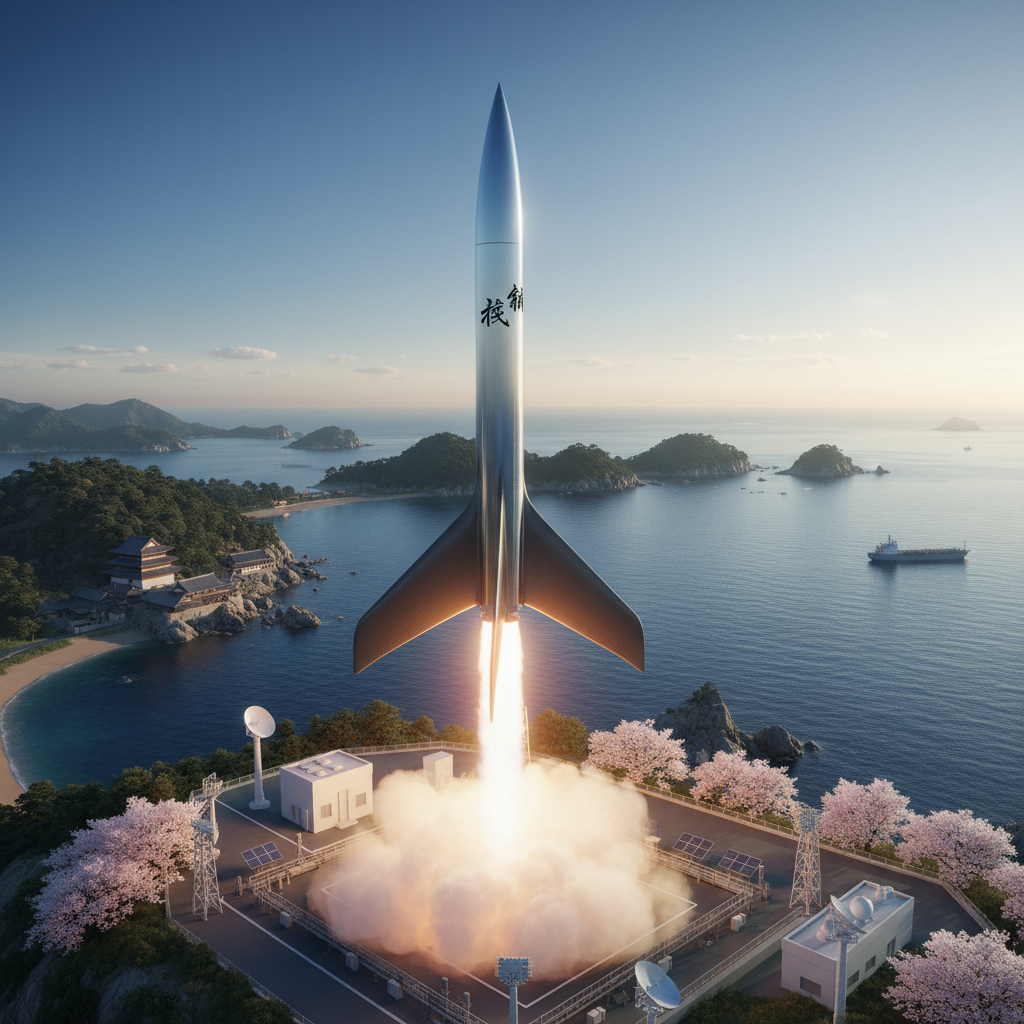
The test took place at a Honda facility in Taiki Town, an area now known as Japan’s “space town.” Thanks in part for cooperation between local governments, businesses, and the Japan Aerospace Exploration Agency (JAXA), Taiki has gradually evolved into a center for space technology over the past few years. Honda’s test gave this sleepy town’s rising profile fresh direction.
During the flight, which lasted 56.6 seconds, the rocket shot 890 feet high. Although that sounds little in comparison to orbital missions, the actual breakthrough came here. Just 37 centimeters off its target landing point, the rocket touched back down softly and precisely. Four retractable landing legs, which also supported the rocket at liftoff, let it safely round trip. Not small, standing almost 21 feet tall and weighing more than 2,800 pounds.
The way Honda tackled the project makes this accomplishment especially noteworthy. The company relied on its decades of knowledge in automation, control systems, and robotics rather than trying to create something totally fresh from scratch. From guidance systems to stabilization, the technologies employed in this rocket mostly come from the same innovations driving Honda’s robotics projects and self-driving cars.
This crossover approach is strategic rather than only clever. Honda has applied systems intended for Earth-bound vehicles to one of the most difficult engineering problems of our day: rocket flight and recovery. The company is cutting expenses by modifying what it already knows, accelerating in an industry sometimes requiring years just to get off the ground.
The current test fits within a bigger, long-term picture. By 2029 Honda expects to have suborbital launch capability. This means designing rockets capable of crossing the atmosphere of Earth and reaching up to 100 kilometers (about 62 miles), the limit of space. For more complicated missions down the road, these flights provide vital data, experience, and validation even though they won’t put satellites into orbit.
The effort is still in the research and development stage for now. About commercializing its rocket program, Honda has not formally stated anything. Its drive, though, is simple and clear. More businesses are looking for reasonably priced, dependable launch choices as demand for satellites and space-based technologies keeps rising. In the fast changing tech scene, Honda would have a big advantage if it could finally launch its own satellites — or even just support its mobility and navigation systems.
Additionally noteworthy is Taiki Town’s importance in all of this. Rocket testing would be ideal in the town because of its open airspace, coastal access, low population density, Now that Honda is included in the mix, Taiki’s profile should only get better as the private space sector of Japan grows.
This launch had nothing to do with show. There were no worldwide sweeping camera views or countdowns beamed about. Still, what Honda accomplished here is not less amazing. It proved it could design a rocket, launch it, land it, and do so with a level of accuracy few businesses get right on the first try.
Typical Honda style, the work was quiet, exact, and well considered. Right now, the company is not rushing to challenge behemoths like SpaceX. Rather, it’s creating something from the ground up, steadily, cleverly, and with intent.
Although this test launched something else—a daring new direction for one of Japan’s most revered brands—it may not have carried the rocket to space. Officially, Honda’s path outside the road has started and is headed up.