- calendar_today August 13, 2025
In 2025, Manitoba’s commercial real estate (CRE) market is demonstrating quiet resilience. While not as headline-grabbing as the booms in British Columbia or Alberta, the province — led by Winnipeg — is showing stable, diversified growth across key asset classes. With a steady population increase, infrastructure upgrades, and a relatively affordable business environment, Manitoba is becoming an appealing market for investors and tenants looking beyond Canada’s largest cities.
A key theme this year is adaptation. Retail centers are evolving to meet community needs, the industrial sector remains tight on supply, and office properties are being reimagined to suit hybrid work preferences. Despite national economic pressures and the aftershocks of rate volatility, Manitoba’s CRE market is holding firm and repositioning for long-term sustainability.
Industrial Market: Demand Outpaces Supply
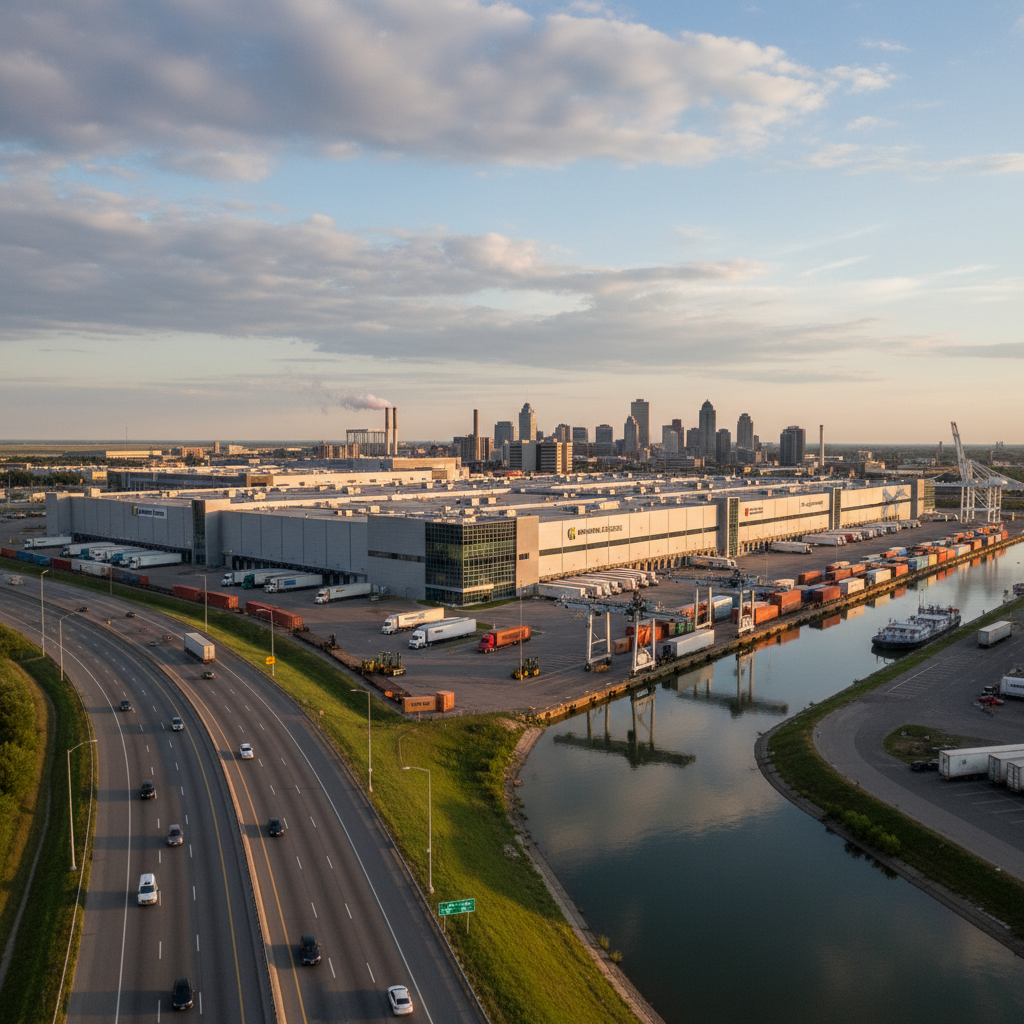
Manitoba’s industrial sector continues to be the province’s top-performing commercial asset class. With Winnipeg serving as a central hub between Western and Eastern Canada, its location remains a strategic advantage for distribution, manufacturing, and cold storage industries.
According to Q2 2025 data from CBRE Winnipeg, industrial vacancy has dropped to under 2.5%, driven by consistent demand from transportation firms, food processors, and third-party logistics providers. The area near CentrePort Canada — North America’s largest trimodal inland port — is seeing significant development activity, with new builds in the pipeline focused on warehousing and supply chain facilities.
“Manitoba’s logistics and agri-food strengths are driving long-term interest in industrial assets,” noted Michelle Dupuis, a commercial broker in Winnipeg. “We’re now seeing multi-tenant warehouse buildings filling up before completion.”
However, industrial land availability remains a challenge. High construction costs and limited shovel-ready parcels around Winnipeg have constrained new supply. Developers are pushing for faster permitting and municipal incentives to keep pace with rising demand.
Office Sector: Downsizing and Repositioning
The office market in Manitoba, like much of Canada, is facing a recalibration in 2025. In Winnipeg’s downtown, vacancy rates hover around 18%, with older Class B and C buildings underperforming. Companies continue to rethink space needs amid hybrid work models and workforce mobility.
That said, the flight to quality is evident. Tenants are gravitating toward energy-efficient, amenity-rich buildings in desirable nodes like True North Square, Portage and Main, and the Polo Park area. Office landlords are increasingly offering flexible lease terms, turnkey build-outs, and co-working arrangements to attract smaller businesses and nonprofits.
Meanwhile, suburban office demand is showing resilience — particularly in areas like River Heights, Linden Woods, and East Kildonan — where accessibility and lower lease rates appeal to professional services, education providers, and healthcare clinics.
“The office isn’t dead in Winnipeg,” said Thomas Boucher, a workplace strategy consultant. “But it’s definitely being repurposed. Companies want better space, not necessarily more space.”
Retail: Community Anchors Thrive as Malls Pivot
Retail real estate across Manitoba is experiencing a localized recovery in 2025, with suburban centers outperforming legacy downtown malls. As consumer spending rebounds and population growth continues, neighborhood-anchored plazas are attracting medical tenants, banks, quick-service restaurants, and essential retailers.
In areas like St. Vital, Charleswood, and Transcona, retail centers with a strong grocery anchor and ample parking are reporting high occupancy rates. Ethnic grocery stores, walk-in clinics, fitness studios, and daycare centers are among the fastest-growing tenant categories.
“Community-driven retail is what’s working,” said Priya Narayan, a retail leasing agent. “Spaces that offer everyday utility and cater to growing neighborhoods are winning.”
Meanwhile, large enclosed malls are undergoing strategic transformation. St. Vital Centre and Kildonan Place have embraced mixed-use redevelopment plans, including residential towers, entertainment space, and co-working hubs. These efforts are part of a broader provincial trend to adapt legacy retail to evolving consumer habits.
Investment Climate: Conservative but Confident
Manitoba’s commercial real estate investment market in 2025 reflects a cautious optimism. Cap rates remain higher than in Toronto or Vancouver, making the province attractive to investors seeking stable returns in a low-volatility environment. According to Avison Young, Manitoba saw a 9% increase in CRE transaction volume year-over-year in early 2025, led by industrial and small-format retail deals.
Institutional investors are still selective, focusing primarily on logistics and build-to-suit developments near transportation corridors. Meanwhile, local investors and REITs are acquiring retail plazas and medical buildings in secondary nodes.
“There’s growing recognition that Manitoba offers reliable cash flow and long-term value,” said Adam Loewen, an investment advisor in Winnipeg. “It’s not a speculative market — it’s a strategic one.”
Winnipeg’s Role in the Province’s CRE Landscape
Winnipeg remains the anchor of Manitoba’s commercial real estate ecosystem. With a population approaching 900,000 and growing steadily, the city is seeing a rise in both residential and mixed-use construction, particularly in the south and west ends.
The city’s downtown revitalization efforts — including street beautification, crime reduction, and pedestrian upgrades — are slowly regaining momentum. Projects like the revitalized Hudson’s Bay building and upgrades around the Exchange District signal a desire to reimagine the city core as more than just an office destination.
Transit-oriented developments along the Southwest Rapid Transit Corridor are also gaining interest, blending mid-rise residential with street-level retail and medical uses.
Outside the capital, regional centers like Brandon and Steinbach are attracting investment in healthcare, logistics, and education infrastructure, further expanding the province’s CRE footprint.
Infrastructure and Economic Drivers
Manitoba’s infrastructure upgrades are playing a direct role in CRE growth. The completion of twinning projects on Highway 75, the expansion of CentrePort Canada Rail Park, and investments in broadband access across rural regions are improving business connectivity and land value.
The province’s economy — historically reliant on agriculture, manufacturing, and transportation — is diversifying. In 2025, growth is coming from clean tech, bioscience, and aerospace sectors. This shift is influencing commercial space requirements, particularly for R&D, cold storage, and advanced manufacturing facilities.
ESG and Energy Efficiency in Focus
Sustainability is gaining traction in Manitoba’s commercial construction sector. While still behind larger provinces in green certifications, there’s increased interest in LEED standards, net-zero building design, and electrification.
Developers are incorporating rooftop solar, EV charging stations, and smart HVAC systems, especially in industrial parks and mixed-use residential-commercial builds. Winnipeg’s new building code updates and Manitoba Hydro incentives are encouraging more energy-efficient practices across commercial assets.
Outlook: Steady and Sustainable Growth Ahead
Manitoba’s commercial real estate sector in 2025 is defined by measured growth, regional stability, and evolving tenant demand. Industrial remains the backbone, while suburban retail and flex office models are adapting to long-term trends. Investment is returning, with a focus on functionality, location, and resilience.
With affordability, population growth, and strategic location on its side, Manitoba is quietly asserting itself as a stable alternative for commercial real estate investors and occupiers looking beyond Canada’s most overheated markets.