- calendar_today August 10, 2025
In a year marked by economic nationalism, the global tariff war of 2025 has landed squarely on Manitoba’s doorstep. As trade barriers rise across North America, investors and businesses in this Prairie province are recalibrating their strategies, watching commodity markets fluctuate, and bracing for the long-term implications of policy decisions made thousands of kilometers away.
At the center of it all: agriculture, manufacturing, and Manitoba’s role as a critical corridor for trade and logistics.
Farming on the Front Lines
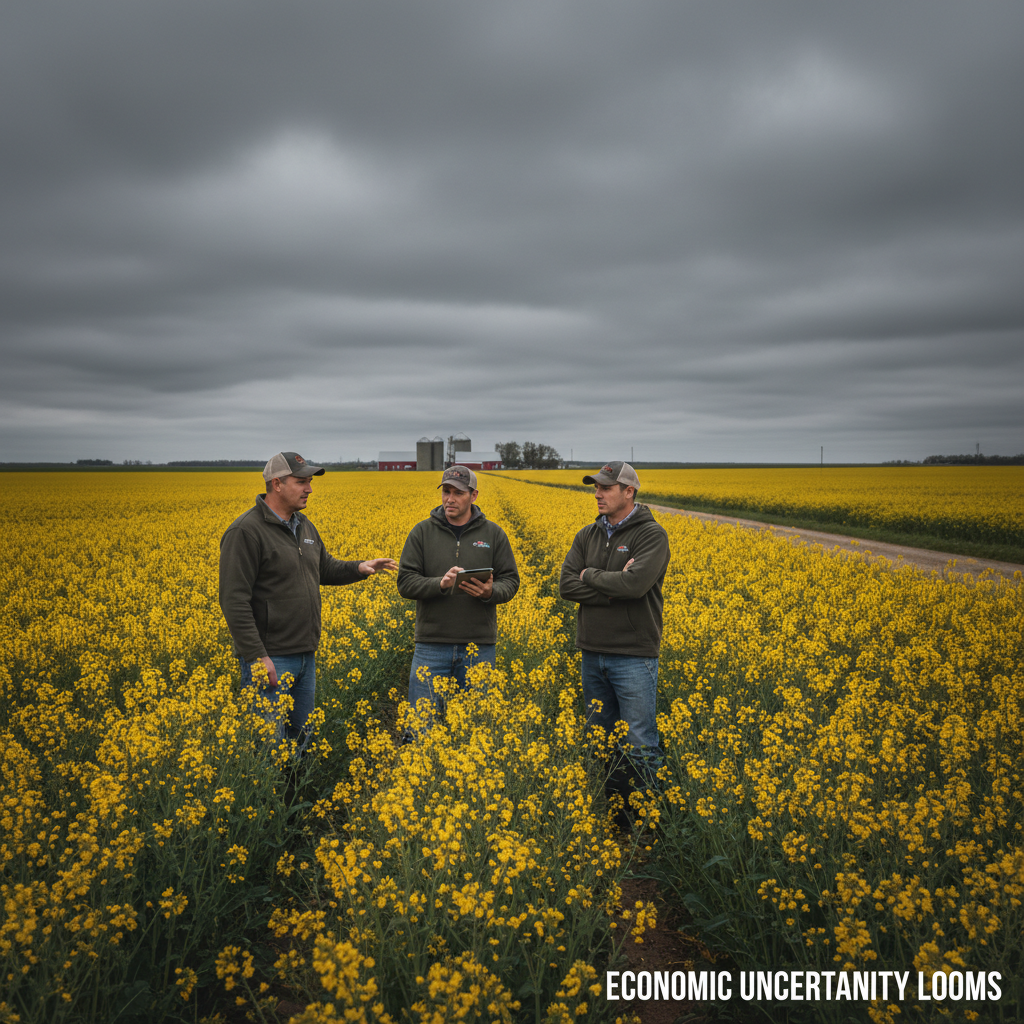
Manitoba’s agricultural heartland has taken an early hit. China’s sweeping 34% retaliatory tariffs on North American grains and oilseeds came just as spring planting ramped up. For farmers in Portage la Prairie, Winkler, and Steinbach, that’s meant rethinking crop rotations and financial projections.
“We were counting on a rebound in Chinese demand for canola and soy,” said Janice Friesen, a third-generation farmer near Carman. “Instead, we’re sitting on last year’s inventory and watching futures slide.”
According to the Manitoba Crop Alliance, canola futures on ICE dipped 11% in April, and projected farm revenues could drop by $380 million if current tariffs remain through harvest.
Fertilizer costs are also rising, due in part to supply chain snags caused by tariffs on chemical imports. This double squeeze—lower export prices, higher input costs—has some family farms considering acreage reductions or temporary layoffs.
Manufacturing Slowdown
Manitoba’s diversified manufacturing sector—from aerospace components in Winnipeg to farm machinery in Brandon—isn’t insulated either. With U.S.-Canada tariff disputes hitting steel, auto parts, and electronics, cross-border contracts are being renegotiated—or scrapped entirely.
Buhler Industries, a major tractor and agri-equipment maker headquartered in Winnipeg, recently announced a temporary production cut due to delayed U.S. orders and increased parts costs.
“Tariffs don’t just raise prices—they freeze decisions,” said Kevin Rollins, supply chain analyst with the Canadian Manufacturers & Exporters (CME) association. “For Manitoba manufacturers tied to American clients, 2025 has become a waiting game.”
Transportation: A Fragile Lifeline
Manitoba’s central geographic position has long made it a transportation hub. But this year, the very rail lines and highways that connect the Prairies to the Pacific and Atlantic are facing uncertainty.
CN Rail and CP Rail report delays in container volumes moving through Winnipeg’s inland port, CentrePort Canada, due to slower Asian imports and reduced west coast shipments.
Export Development Canada (EDC) estimates a 7.4% decline in Manitoba’s total export value in Q2 2025, driven largely by weaker trade with Asia and the U.S.
Investors Adapting to a New Normal
The tone among investors in Manitoba is cautious but not panicked. The Winnipeg Stock Exchange, while small in scale, reflects the same volatility seen nationwide. Resource-linked stocks and agribusiness equities have dipped, while defensive plays in utilities, food distribution, and infrastructure are trending upward.
Local wealth managers are advising clients to:
- Diversify beyond agri-heavy portfolios
- Increase exposure to domestic infrastructure and logistics
- Seek opportunities in renewable energy and tech adaptation
“There’s a pivot underway—from global growth bets to local resilience bets,” said Shana Toews, investment advisor at Assiniboine Wealth Management. “Manitoba’s strength may come from looking inward this year.”
Bright Spots: Domestic Growth & Innovation
Despite the turmoil, some sectors are quietly benefiting. Local food processors—selling into Canadian grocery chains—are seeing steady demand. The Manitoba Food Development Centre in Portage la Prairie reports a surge in domestic product development as firms seek to fill gaps left by expensive imports.
The clean-tech and ag-tech sectors, buoyed by both federal grants and growing investor interest, are also holding ground. Several Winnipeg-based startups developing precision agriculture tools are attracting VC interest as Canadian farms look to increase efficiency.
What to Watch Next
For investors and business owners in Manitoba, the next six months will be critical. Key indicators include:
- Tariff negotiations following the upcoming U.S.-Canada trade summit in July
- Commodity price shifts during the summer harvest
- New provincial supports, possibly via the Manitoba Growth, Enterprise and Trade initiative
As trade routes realign and supply chains reset, the province faces challenges—but also a rare moment to innovate.
“In some ways, this is forcing us to become more self-reliant,” said Premier Wab Kinew during a recent economic roundtable. “That’s painful in the short term, but potentially transformative for Manitoba’s long-term economic identity.”
Final Word for Investors
Manitoba’s economy is under pressure—but not without options. While the global picture remains murky, investors here are learning a crucial lesson: resilience isn’t just about weathering storms; it’s about planting seeds that thrive when the clouds lift.
Stay ahead. Sign up for our Manitoba Investment Insight Brief for weekly updates, economic forecasts, and expert commentary tailored to Prairie investors navigating a changing world.