- calendar_today August 7, 2025
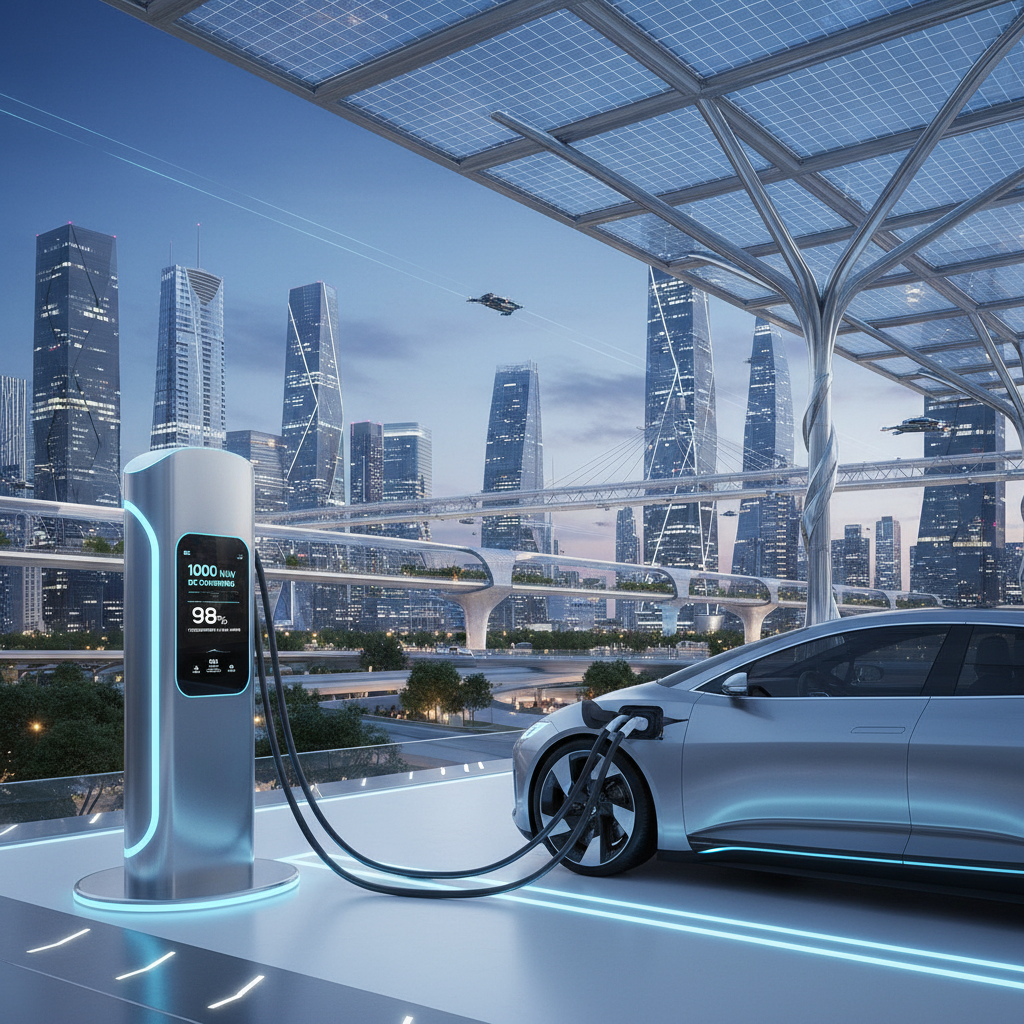
The Chinese EV industry leader BYD has introduced its revolutionary “super e-platform” to transform the electric vehicle market following its achievement as the top EV seller worldwide. The new system achieves 10C charging power with 1,000 kW DC chargers to reduce EV charging times and make them nearly as convenient as refueling traditional gasoline vehicles. This development directly addresses one of the most significant barriers to widespread EV adoption: the persistent concern over lengthy charging periods.
BYD’s innovation excels in achieving a remarkable 249-mile (400 km) driving range within just five minutes. The achievement greatly exceeds existing industry benchmarks with Tesla Superchargers maxing out at 250 kW and Electrify America chargers at 350 kW while Formula E’s chargers peak at 600 kW. BYD chairperson Wang Chuanfu announced their objective to achieve electric vehicle charging speeds equivalent to traditional gasoline refueling as part of their ambitious company vision.
The “super e-platform” utilizes advanced batteries that support 10C charging rates enabling full battery charge in just 6 minutes during ideal conditions. When connected to 1,000 kW DC chargers this technology achieves fast energy transfer which drastically cuts down charging duration. BYD intends to set up more than 4,000-megawatt chargers throughout China to support its Han L sedan and Tang L SUV electric vehicles.
The global market conditions reveal a complicated scenario. The Chinese company BYD is expanding its reach in international markets, especially in Europe but encounters major political barriers when trying to enter the US market. Legislators from across the political spectrum have raised national security and economic competition issues which has prompted moves to block Chinese EV manufacturers from the US market. Recognizing the variation between range estimation standards remains essential. BYD’s 249-mile range estimate derives from China’s CLTC standard which produces more favorable results than the US EPA standard. The EPA test results would probably show a reduced range compared to other standards.
U.S. car manufacturers can still pursue licensing opportunities for BYD’s innovative technology despite facing various hurdles. American car manufacturers can advance faster charging standards adoption through licensing agreements which help them navigate political challenges and offer rapid charging to more customers. The effectiveness of this technology in real-world applications depends upon multiple variables such as battery temperature and state of charge as well as the quality of the charging infrastructure. The efficiency of a vehicle measured in kilometers per kilowatt-hour (km/kWh) determines how well electric energy transforms into practical driving range.
The “super e-platform” introduced by BYD represents a significant breakthrough in EV charging technology by addressing the primary obstacle to electric vehicle adoption which is extended charging durations. Through its extensive charging network development throughout China the company fortifies its leadership status in the EV market while establishing a new foundation for electric transportation’s future. Through ongoing technological advancements and infrastructure expansion BYD is creating a new landscape for electric transportation that makes EV charging as fast and straightforward as traditional gas refueling.
Automakers will enter heightened competition if rapid-charging technology becomes widespread by driving them to enhance their EV platforms through innovation. The ongoing technology competition will result in the creation of better battery systems while extending the driving range of vehicles and improving access to quick-charging stations across the globe. The adoption of faster EV charging technologies such as BYD’s will provide consumer benefits while advancing global efforts to create a sustainable transportation infrastructure. Licensing agreements offer opportunities that enable electric vehicles to become the future norm which makes sustainable transportation increasingly practical and attractive.