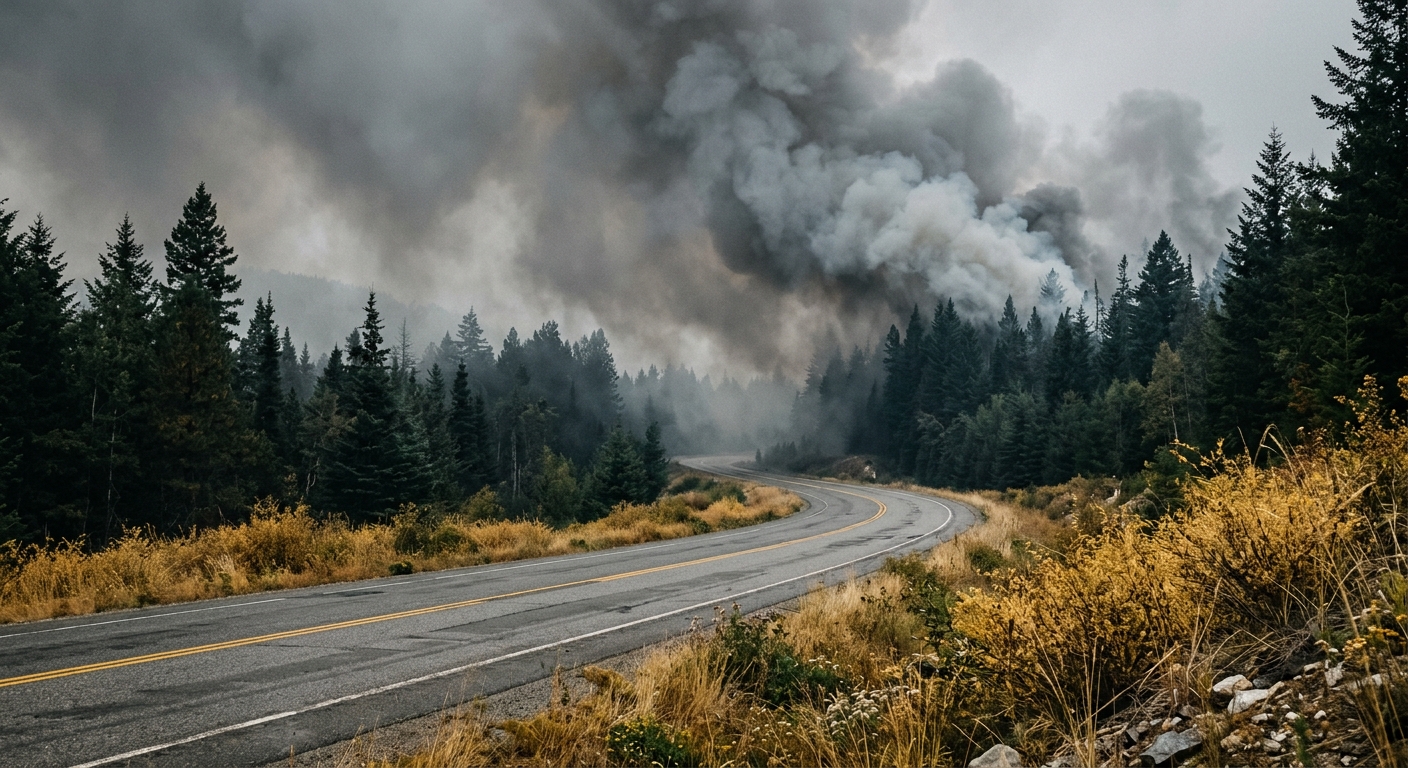
AI-generated illustration; not a photograph of the reported event.
- calendar_today August 2, 2026
The Toronto Metro region is closely monitoring the escalating impact of bc wildfires that have led to widespread evacuation orders stretching across British Columbia’s North Okanagan. As multiple fires expand in both size and intensity, local officials and emergency responders are collaborating to keep affected residents safe and informed.
Bradley Creek Wildfire Doubles in Size
Among the most concerning incidents is the bradley creek wildfire, which has more than doubled its footprint over the weekend. According to the B.C. wildfire service, the blaze grew from approximately 10 square kilometres to about 26 square kilometres since Saturday. The increase in wildfire growth has led to fresh evacuation orders impacting thousands, including those in Spallumcheen, Armstrong, and several Indigenous reserves near Okanagan Lake.
Okanagan Lake Fires and Additional Threats
Authorities have reported that the region surrounding Okanagan Lake remains particularly vulnerable as the okanagan lake fires multiply. The Quilpituk Creek wildfire has prompted new wildfire evacuations, with dozens more local properties now under alert. Community leaders emphasize that Toronto Metro residents with family or interests in British Columbia should pay close attention to developments and support regional response efforts where possible.
Wider Impacts and Provincial Response
Province-wide, the number of properties impacted by wildfires has surged. Over 8,500 properties are now under evacuation orders or wildfire alerts as multiple blazes threaten communities. The Ministry of emergency management and Climate Readiness highlighted a clear rise in properties affected compared to the previous day, underscoring the rapid pace at which the situation continues to evolve.
Other Major Incidents: East Kootenay and Pear Lake Fires
Beyond the North Okanagan, significant attention is being directed to the Wait Creek fire in East Kootenay. The east kootenay fire places nearly 1,000 more properties at risk, further straining emergency response resources. Simultaneously, the pear lake fire remains the largest active wildfire in the province, burning across an estimated 1,039 square kilometres and drawing concern from fire officials who track its unpredictable behavior.
Weather Conditions and Ongoing Mitigation
Recent cooler temperatures and increased humidity have offered some short-term relief, helping to ease the intensity of several key fires. However, persistent drought conditions continue to keep the region susceptible to more flare-ups and spread. The wildfire service stresses the importance of public vigilance and staying current with wildfire alerts throughout the affected zones. Plans for additional wildfire evacuations remain in place as ground crews and air support aim to contain further wildfire growth.
Support and Community Efforts
Residents in Toronto Metro and across Canada are being asked to show solidarity with those displaced by the expanding wildfires. Community organizations, relief agencies, and regional networks are working to provide shelter, emergency supplies, and critical information. The continued diligence of the Ministry of emergency management, local fire personnel, and volunteers underscores a resolve to protect property and preserve life even as the wildfire season intensifies.