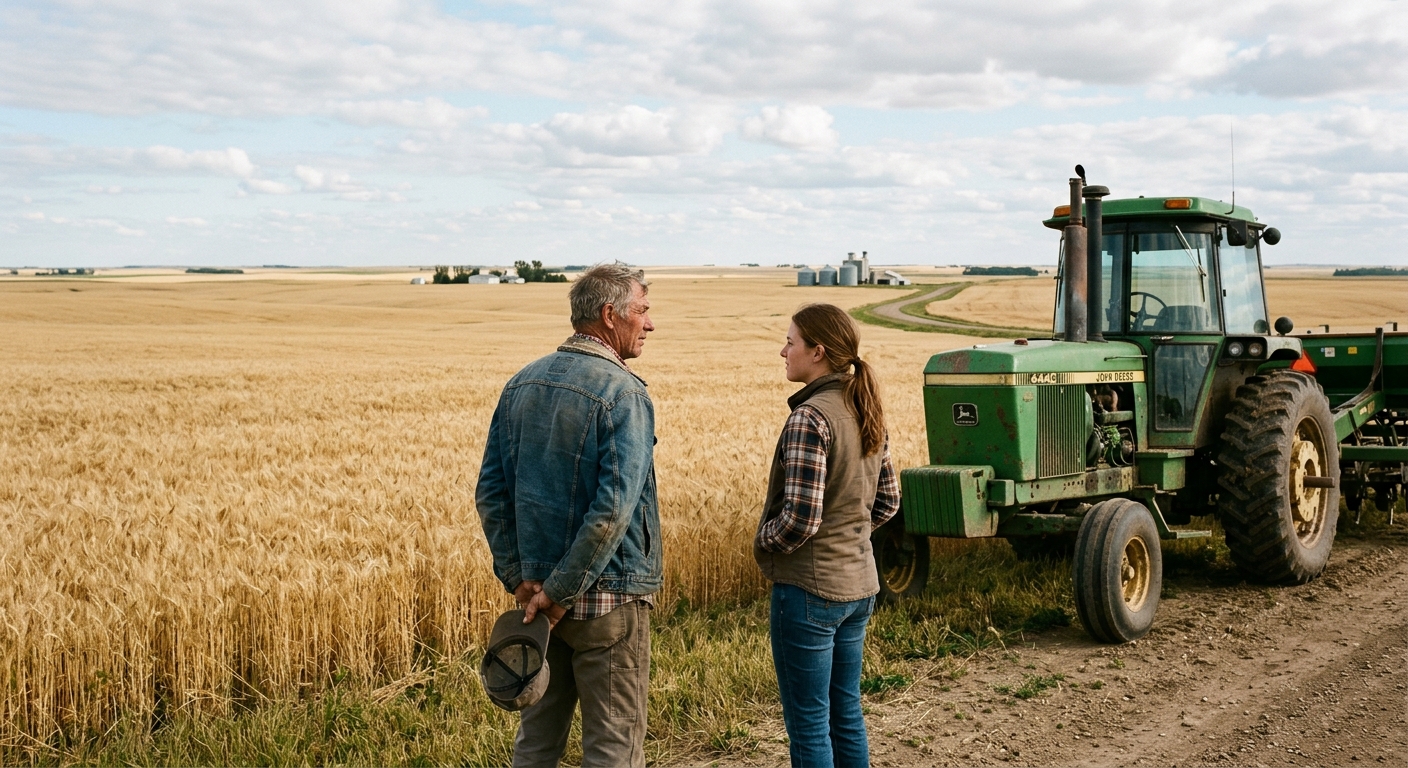
AI-generated illustration; not a photograph of the reported event.
- calendar_today November 7, 2026
Federal Budget 2026 Introduces Expanded Farm Tax Rollover
Canadian farm families are reacting positively to a proposal in the 2026 federal budget that would allow them to pass agricultural land to nieces and nephews without incurring a capital gains tax. This expansion of the intergenerational farm property rollover is being described as a significant step for preserving family farming operations across the country.
Current Rules and Proposed Changes
Until now, Canada's tax laws allowed farms to be transferred tax-free only to select relatives such as children, partners, grandchildren, or great-grandchildren. Transfers to other family members—like nieces and nephews—have triggered substantial capital gains taxes, often forcing families to sell to outsiders rather than keep farms within the extended family structure. The proposed change removes this barrier, broadening who can take over family farming operations.
Industry and Producers Praise the Move
Farmers like Jason Claeys near Deloraine, Manitoba, see the proposed changes as a major improvement. Claeys, who operates his family farm with his father and nephew, Tyler Didyk, noted that the new rules would make transitioning the farm to the younger generation much easier. "With my nephew wanting to farm, it's going to hopefully make transitioning a little bit easier," Claeys said. "At least we have that option ... because otherwise, it looks like the best way to do it would be to sell it to someone else, which obviously isn't what we want."
Claeys emphasized that the proposal offers families more choices for succession and demonstrates the federal government's willingness to listen to farmer concerns, especially after difficult farming seasons and persistent lobbying efforts.
Addressing Succession and Modern Farming Realities
Derryn Shrosbree of Farmstrong Financial, who advocates for farm succession planning, called the expanded rollover "an absolute win" for Canadian farmers, food security, and rural communities. Shrosbree has spent the past year advocating for this change, highlighting that succession obstacles have contributed to the decline of many family farms, both personally and in his work with clients.
Shrosbree pointed out that, with smaller modern families and fewer children pursuing agriculture, it is essential to include nieces and nephews among those eligible to take over farms tax-free. He estimates that between 3,000 and 5,000 farm operators of Canada's nearly 190,000 could be directly affected by the new rules.
Broader Financial Challenges Remain
While welcoming the proposed tax changes, Claeys noted that other financial challenges for farmers remain, particularly the high costs associated with fuel and fertilizer. "It's those kinds of things that we have no control over," he said, referencing price fluctuations that impact bottom lines.
Implications for Rural Canada
The proposed amendment signals attention to the evolving realities of Canadian agriculture, ensuring that family operations can be maintained even as family structures change. Industry experts see it as a crucial tool for keeping rural communities vibrant and supporting the next generation of Canadian producers.
Source: cbc.ca.