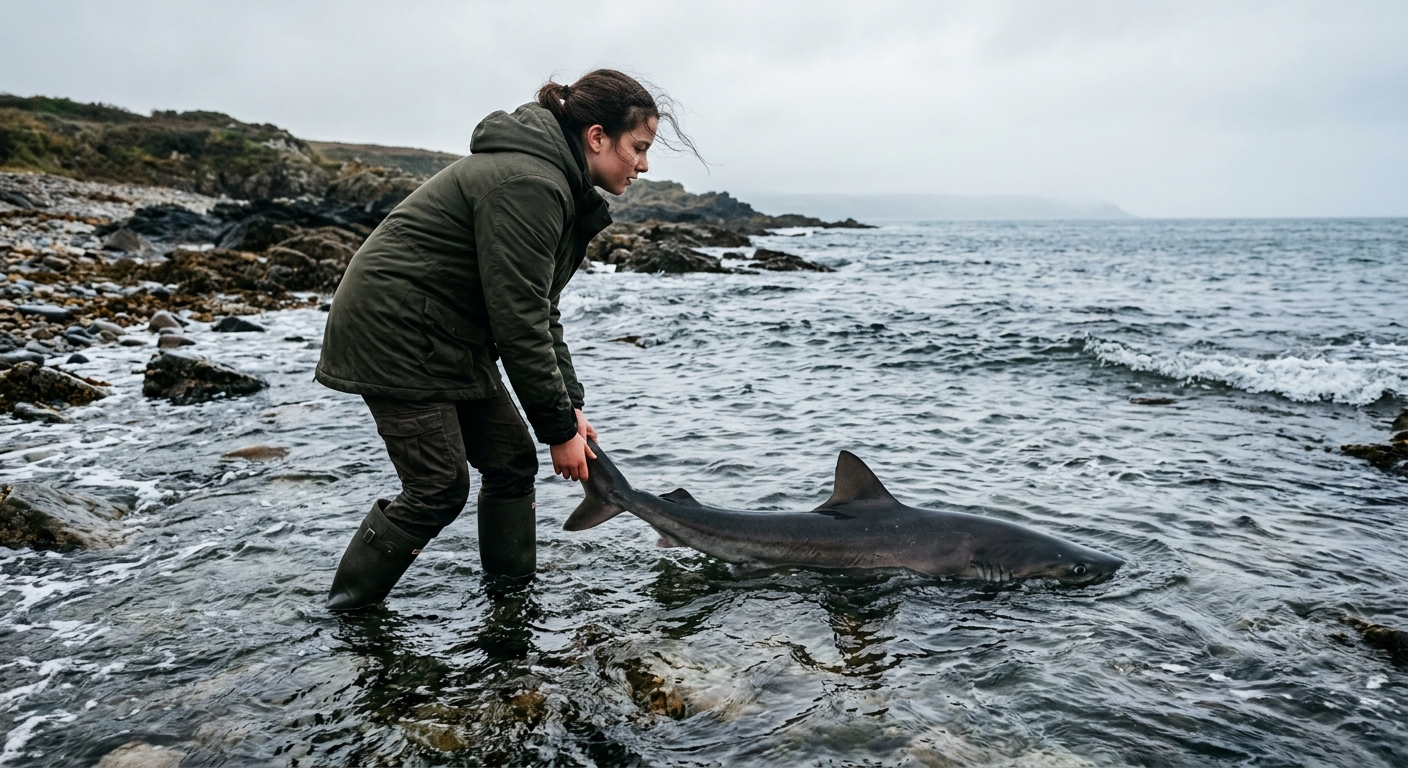
AI-generated illustration; not a photograph of the reported event.
- calendar_today August 16, 2026
Toronto Metro—A recent shark rescue on the shores of Maces Bay has thrown the spotlight on both endangered marine life and the power of community action in Atlantic Canada. The successful return of a porbeagle shark—a species seldom seen in shallow waters—has captured the attention of environmental groups and wildlife advocates across Toronto Metro and beyond.
Teenager’s Courageous Effort Saves Porbeagle Shark
In a remarkable display of bravery and quick thinking, 15-year-old Finn Holland confronted a rare moment when he encountered a two-metre, 70-kilogram porbeagle shark stranded on a New Brunswick shoreline. Although initially overwhelmed by the size of the marine animal, Holland managed to guide the shark back into the Atlantic, ensuring its survival. The incident not only highlights the courage of an individual but also demonstrates the importance of prompt wildlife rescue in Canada’s coastal communities.
Understanding the Porbeagle Shark
The porbeagle shark is a distinguished member of the regional marine animals, known for its adaptability to frigid Atlantic Canada waters. Unlike many sharks, porbeagles can maintain internal body temperatures higher than their environment, an evolutionary trait that allows them to thrive in conditions typically unsuitable for similar species. Despite their adaptability, porbeagle shark numbers have plummeted, and the species now holds a place on Canada’s list of species at risk.
Conservation Concerns: Endangered Species in Focus
Marine biologists have expressed concern over the declining populations of the porbeagle shark. The recent rescue underlines growing anxieties regarding endangered species and the effectiveness of present-day wildlife conservation efforts. Experts, including Neil Hammerschlag of the Shark Research Foundation, note that these sightings are “exceptionally rare,” especially since porbeagles prefer deeper waters and usually steer clear of areas that bring them close to human activities.
Impacts of Fishing and Environmental Threats
The presence of a porbeagle shark in such shallow circumstances may be linked to fishing impact or underlying health issues. Fisheries in the region sometimes inadvertently capture these sharks as bycatch, affecting their already diminished numbers. The latest event serves as a timely reminder for policymakers and environmentalists to reassess the impact of fishing practices and reinforce protections for marine animals under the Species at Risk Act.
Community Response and the Role of Education
Following the incident, the town of Maces Bay and broader new brunswick wildlife advocates rallied behind Holland’s actions. Toronto Metro educators and conservation organizations have pointed to the event as a compelling example of positive youth involvement in wildlife rescue. By raising awareness about shark sightings and endangered animals, local communities play a critical role in advancing environmental stewardship and fostering broader engagement in conservation efforts.
Looking Ahead: Protecting Marine Animals in Atlantic Canada
This standout moment brings needed attention to the fragile future of the porbeagle shark and similar marine species. Stakeholders across Toronto Metro are encouraged to support conservation initiatives and educate the public about the vital role of wildlife rescue. The story also underscores the value of individual contributions and the importance of shared responsibility in safeguarding Atlantic Canada’s unique natural heritage for generations to come.