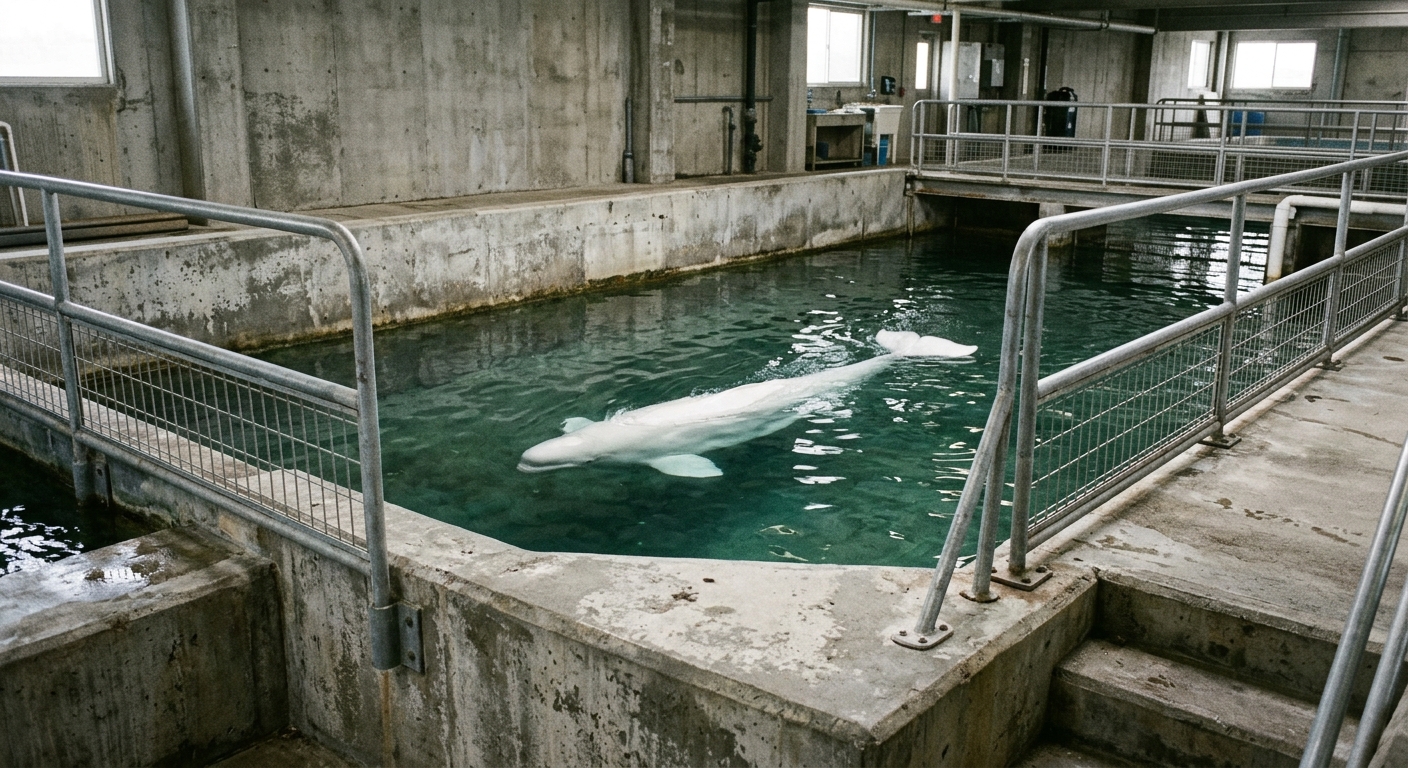
AI-generated illustration; not a photograph of the reported event.
- calendar_today September 25, 2026
Toronto Metro — Recent post-mortem examinations have shed new light on the health challenges faced by the Marineland belugas, highlighting significant concerns for marine mammal welfare in the region. Two beluga whales, Peekachu and Rain, who were transferred from Marineland in Niagara Falls to Chicago’s Shedd Aquarium, were suffering from advanced, chronic gastrointestinal disease prior to their relocation—a condition experts believe developed months or even years before their move.
Marineland Belugas Faced Longstanding Health Issues
The findings emerged as part of a comprehensive investigation into the health and care of beluga whales at Marineland, a long-standing tourist attraction near Niagara Falls. Post mortem reports indicated that Peekachu and Rain arrived at their new home with severe gastrointestinal disease, which contributed significantly to their decline. Experts determined the illnesses predated the whales’ transfer, suggesting that the belugas’ health deteriorated over an extended period at their original facility.
Foreign Objects Discovered During Examinations
Beyond gastrointestinal disease, veterinarians conducting the post mortem also discovered a range of foreign materials inside Peekachu’s stomach, including bird feathers, sticks, and rocks. Shedd Aquarium officials concluded these materials had likely been ingested prior to the rescue, though they were not found to be the direct cause of death. No evidence of communicable disease was noted, ruling out infections that could have affected other marine mammals at Shedd Aquarium.
Whale Health Under Scrutiny by Canadian Authorities
The movement of these beluga whales was part of a larger operation involving the relocation of 30 belugas and four dolphins from Niagara Falls to various aquariums in the United States and Spain. Fisheries and Oceans Canada, responsible for overseeing marine mammal welfare in Canadian waters, strongly criticized the previous care of these whales. The agency called out what it identified as “unacceptable neglect” of whale health at Marineland, and emphasized the need for improved standards for facilities housing marine species in Toronto Metro and beyond.
Animal Welfare Groups Call for Early Intervention
Animal Justice, a national advocacy organization, highlighted ongoing concerns that the belugas were not healthy enough to withstand the stress of relocation. The group called for earlier intervention to address whale health, arguing that proactive veterinary attention was crucial before any beluga rescue or beluga relocation effort. Their statement underlined the importance of comprehensive assessments of marine mammals before undertaking challenging rescue operations.
Lessons for Future Beluga Rescue Efforts in Toronto Metro
The deaths of Peekachu and Rain have underscored the inherent difficulties in rehabilitating marine mammals after prolonged periods of substandard care. Experts suggest that lessons learned from this chapter could inform future rescue initiatives across the Toronto Metro region and beyond. Stakeholders in marine conservation are now advocating for clearer policies regarding animal neglect and for reinforced protocols to support the successful relocation and long-term welfare of beluga whales and other species.
Regional Institutions Strengthen Marine Mammal Welfare
Institutions across Toronto Metro are now reviewing their own marine mammal welfare policies and veterinary procedures. With the spotlight on beluga relocation, organizations such as zoos, aquariums, and research centers are emphasizing the importance of ongoing health monitoring and transparent care for all marine mammals—including potential future rescue cases stemming from facilities like Marineland or others in Niagara Falls.