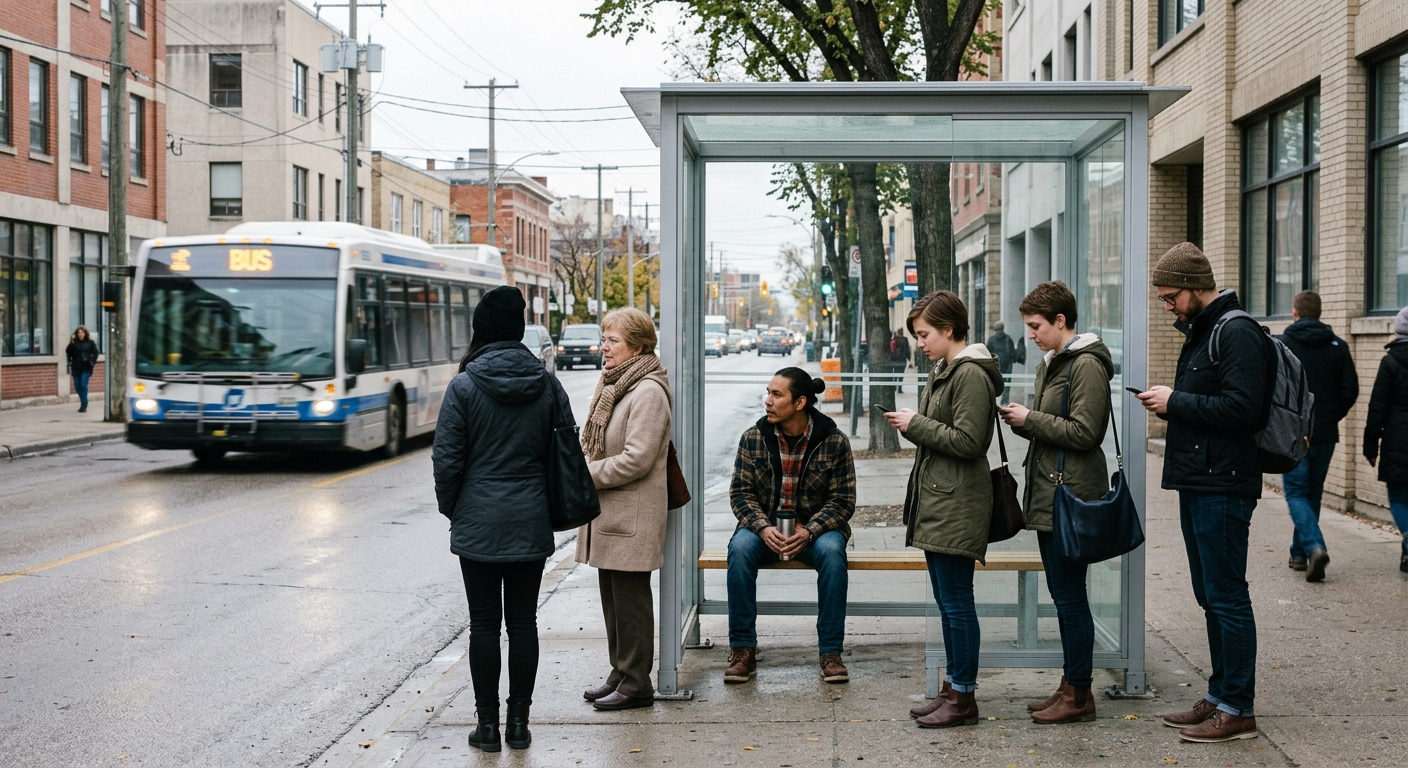
AI-generated illustration; not a photograph of the reported event.
- calendar_today October 20, 2026
Public Transit Satisfaction Drops Among Winnipeggers
A recent survey by Abacus Data indicates that 60 per cent of Winnipeg residents believe public transit in their city is worse now than it was four years ago. These findings arrive just ahead of the municipal election scheduled for October 28. Dissatisfaction is being driven by changes brought about by last year’s extensive transit overhaul, including adjustments to bus routes and the elimination of numerous bus stops.
Impact of Transit Changes on Riders
Jennet Pidgeon, a 78-year-old resident who relies on Winnipeg Transit, described the new system as "way more inconvenient, not user friendly," after the overhaul in June 2025 introduced increased transfers, longer waits, and extended walks between stops. Pidgeon, who uses a walker, noted that the changes have led many seniors like her to apply for Transit Plus (formerly Handi-Transit), as regular bus services no longer meet their needs for accessing essential services and appointments.
Transit Plus, a door-to-door service designed for people with mobility issues, requires bookings in advance and may involve shared rides with multiple passengers, adding further inconvenience for riders like Pidgeon.
Rider Concerns: Safety and Accessibility
Other riders have mentioned different challenges with the new system. Claudia Ferrufino, a student and former retail worker, cited safety concerns on the bus—particularly during nighttime hours—as her primary reason for leaving her previous job. "It was really unsafe, and, like, it was getting worse," Ferrufino said about working closing shifts and commuting on the bus.
Many residents are frustrated about having to transfer more frequently and walk farther to the nearest bus stop. Approximately 1,200 bus stops were eliminated in 2025 with the intention of improving reliability and speeding up trips.
Mixed Reactions and Some Improvements Noted
While most sentiment is negative, some Winnipeggers have pointed out areas of improvement. Pearson Montgomery, 24, acknowledged benefits such as the extension of the Blue Line and increased frequency on certain routes. However, issues persist with bus reliability and the difficulty of making connections, resulting in longer commutes for some riders.
Montgomery reported being passed by several full Blue Line buses during a commute, underscoring ongoing capacity and scheduling issues.
Union and Official Responses
The transit union, Amalgamated Transit Union Local 1505, is hearing many of these complaints directly from drivers and passengers. Its president, James Van Gerwen, said more funding is needed to make meaningful improvements. He pointed to new investments such as the construction of an additional garage and the installation of full driver shields as recent positive steps but emphasized the need for updated fare and radio systems.
The union is supporting selected council candidates but has chosen not to endorse any mayoral candidates, stating that none have presented sufficiently progressive transit platforms.
Patricia Bal, a communications officer for Winnipeg Transit, stated that the agency is making continuous adjustments to bus stops and routes based on rider feedback, and has added buses to some routes and extended service to new areas. Transit officials have encouraged the public to submit further feedback through the city’s 311 service.
Transit as an Election Issue
The Abacus Data survey, conducted in August among 687 adult Winnipeggers, also found that public transit and housing received the highest disapproval ratings among city services. While only about 11 per cent of Winnipeggers commute using public transit, dissatisfaction levels could influence voter priorities as the municipal election approaches.
Source: cbc.ca.