- calendar_today August 7, 2025
Heartland Voices, Digital Echoes – How Manitoba Artists Are Exploring AI Without Losing What Matters
Manitoba Artists Are Moving Slowly—and That’s Intentional
Creativity in Manitoba isn’t rushed. It’s rooted in storytelling, community, and a deep connection to land and history. Whether it’s Métis beadwork, spoken word in Winnipeg, or sculpture in rural galleries, the art here feels lived-in. So when AI in Manitoba art started surfacing, the instinct wasn’t to jump in—it was to pause, reflect, and ask: does this actually help?
A multidisciplinary artist from Brandon put it like this: “AI’s interesting. It can give me new ways to look at structure or layout. But if it’s not grounded in my story, it means nothing.” That honesty is shaping how AI is used across the province—gently, sparingly, and with full awareness of its limits.
Filmmakers Are Letting AI Support—But Not Replace
Manitoba’s film scene is a mix of grassroots passion and cultural expression. From Indigenous doc projects in the North to experimental films in Winnipeg’s Exchange District, stories here are personal. Some filmmakers are using AI in post-production, especially for organizing content or transcribing interviews.
A director in Thompson shared, “AI helped me tag emotion in interview footage, but every edit—every pause, every cut—that still came from my gut.” For these creators, AI can save time, but it never shapes the message.
Visual Artists Are Curious, But Staying Close to Craft
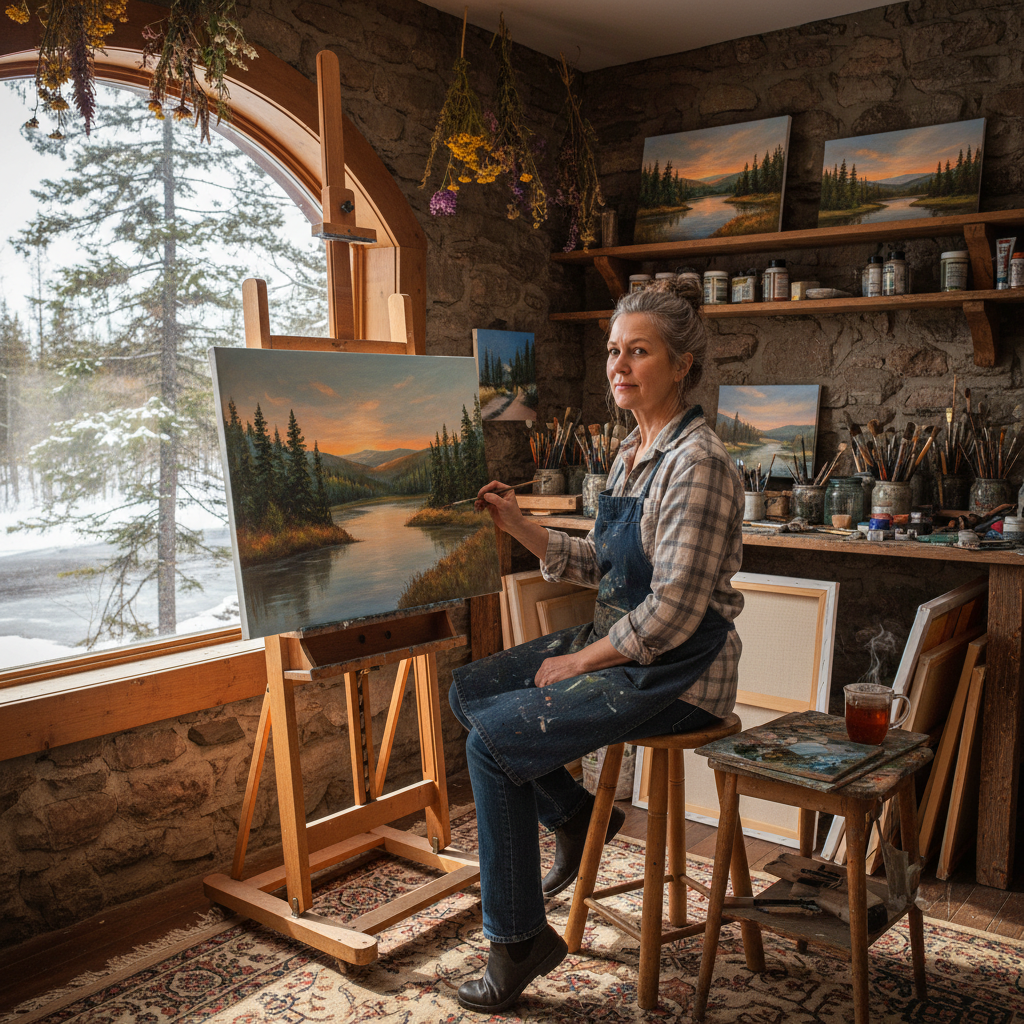
Across Manitoba’s rural towns and city galleries, painters, printmakers, and digital artists are testing AI in design tools—mostly during the early brainstorming phase. But the heart of their work still comes from personal history, connection to culture, or the landscapes around them.
One visual artist in The Pas told me, “I used AI to remix a layout for a series on northern migration. But the textures—the weight of the piece—that came from my time living through it.” AI might offer form, but here, meaning still comes from memory.
Students Are Blending Tradition with Tech—Thoughtfully
At the University of Manitoba and art colleges in Winnipeg, students are starting to mix creative technology in Manitoba with themes of identity, culture, and personal reflection. Projects range from AI-assisted poetry to immersive video that reacts to audience movement.
One student said, “AI gave me a framework for a sound project—but the idea came from my grandfather’s voice. It had to be emotional, or it didn’t matter.” That balance—digital experimentation guided by human emotion—is shaping the next generation of creators.
Many Are Choosing to Keep AI Out—And That’s Just as Valid
Not everyone is interested in using AI. A visual storyteller in a northern First Nations community told me, “We don’t need machines to carry our stories—we carry them ourselves.” Others have similar concerns, especially around cultural appropriation, automation, and the loss of storytelling depth.
And in Manitoba, that decision is fully respected. It’s not about resisting change—it’s about protecting voice.
How Manitoba Artists Are Actually Using AI
• To support early concepts – Artists use AI to explore layout, rhythm, and flow
• To save time – Filmmakers and musicians use AI for tagging, organizing, or transcribing
• To challenge creative direction – Writers and digital artists explore unexpected prompts
• Never for emotional depth – The story still comes from lived experience and community
Final Thoughts
In Manitoba, creativity isn’t loud—but it’s strong. It rises from shared history, quiet resilience, and deep ties to people and place. So as AI makes its way into creative circles, artists here are deciding what fits—and what doesn’t.
Some are curious. Some are cautious. Many are doing both at once. But across the board, one thing is clear: art in Manitoba will always come from something deeper than a data set.
It comes from the heartland. And it’s staying that way.