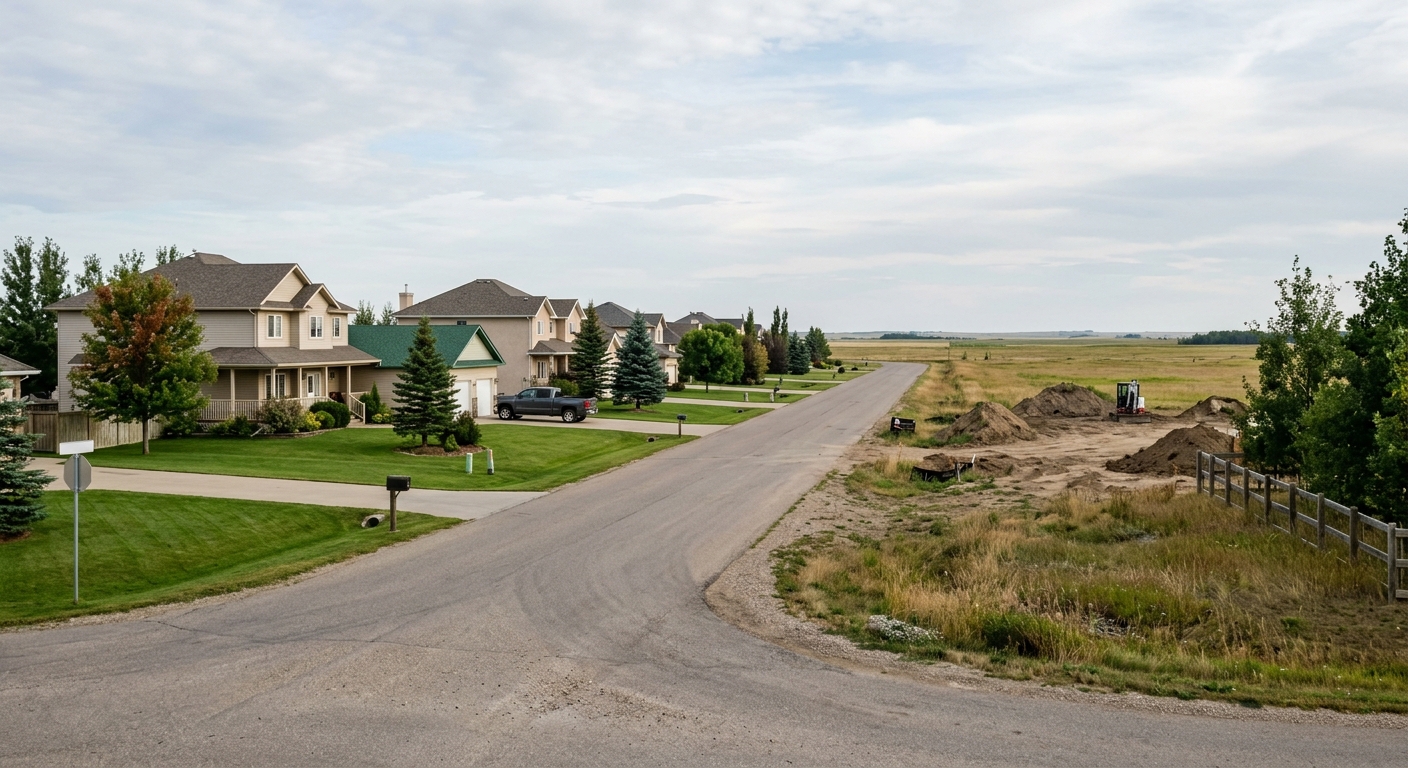
AI-generated illustration; not a photograph of the reported event.
- calendar_today October 21, 2026
Residential Density at the Heart of Mayoral Campaign
With a rising population in the Winnipeg region, the debate over residential density has become the main dividing line among candidates in the East St. Paul mayoral race. As the rural municipality northeast of Winnipeg contends with increasing housing demand, three candidates are offering distinct visions for the community's future development.
Differing Approaches to Growth and Housing Demand
Current mayor Carla Devlin, who is seeking re-election, highlights the need for transitional housing to accommodate seniors wishing to downsize yet remain in East St. Paul. Devlin acknowledges the prevailing preference for large-lot development but insists there's a need for apartments or condos so long-term residents are not compelled to leave for options in Winnipeg.
"We definitely want to keep community the way it is. We hear that at the door often. But we do have seniors that want to stay in community, and we often see them move to the city of Winnipeg," Devlin explained. "We have to find a way to form transitional housing."
Resistance to High Density Development
Two of Devlin’s rivals, Orest Horechko and Mike Watson, strongly oppose high-density development. Both have pointed to community concerns about the impact of denser housing on the semi-rural character of East St. Paul.
Orest Horechko, who has served as a councillor for 12 years, is clear in his opposition: "I am against highrises, OK? Duplexes or things like that totally make sense. We have that in our community right now. Highrises, they don't fly."
Mike Watson, a newcomer to politics and owner of a Winnipeg meat shop, echoes these sentiments in his campaign, using election signs urging residents to "say no to high density development." Watson believes the current council is not respecting residents' desires, stating, "this isn't what the residents want."
Ongoing Land Use and Infrastructure Constraints
The push and pull over residential density comes amid broader planning and infrastructure challenges. Statistics Canada estimates that East St. Paul has about 10,400 residents, forming part of the larger 955,000-person Winnipeg Census Metropolitan Area. Developers in Winnipeg’s exurbs, including East St. Paul, have requested changes to planning frameworks to allow for more housing as the region grows.
A new secondary plan for 1,000 acres east of Highway 59 is under review, with residents raising objections and taking the issue to the provincial municipal board. This plan could permit four-storey residential buildings and townhouses in selected city village areas. Meanwhile, there is a moratorium on new development in East St. Paul until a regional sewage-treatment plant can accommodate increased demand.
Campaign Issues: Conflict of Interest Concerns
Both Horechko and Watson have voiced concerns regarding Devlin’s outside employment. Devlin is president of Sio Silica, a sand-mining company seeking to establish operations in the nearby RM of Springfield. Watson commented, "I think it puts her in a lot of conflicts," while Horechko noted that Devlin has "a lot on that plate." Devlin responded that she has become accustomed to criticism and remains focused on doing "what you know is best for community."
Outlook as Election Day Approaches
As proposals for apartments and condos take centre stage, the debate over residential density is poised to shape the outcome of the East St. Paul mayoral race. Voters will have their say when the municipal election takes place on October 28, amid ongoing discussions about housing development, land use, and community character.
Source: cbc.ca.