- calendar_today August 20, 2025
.
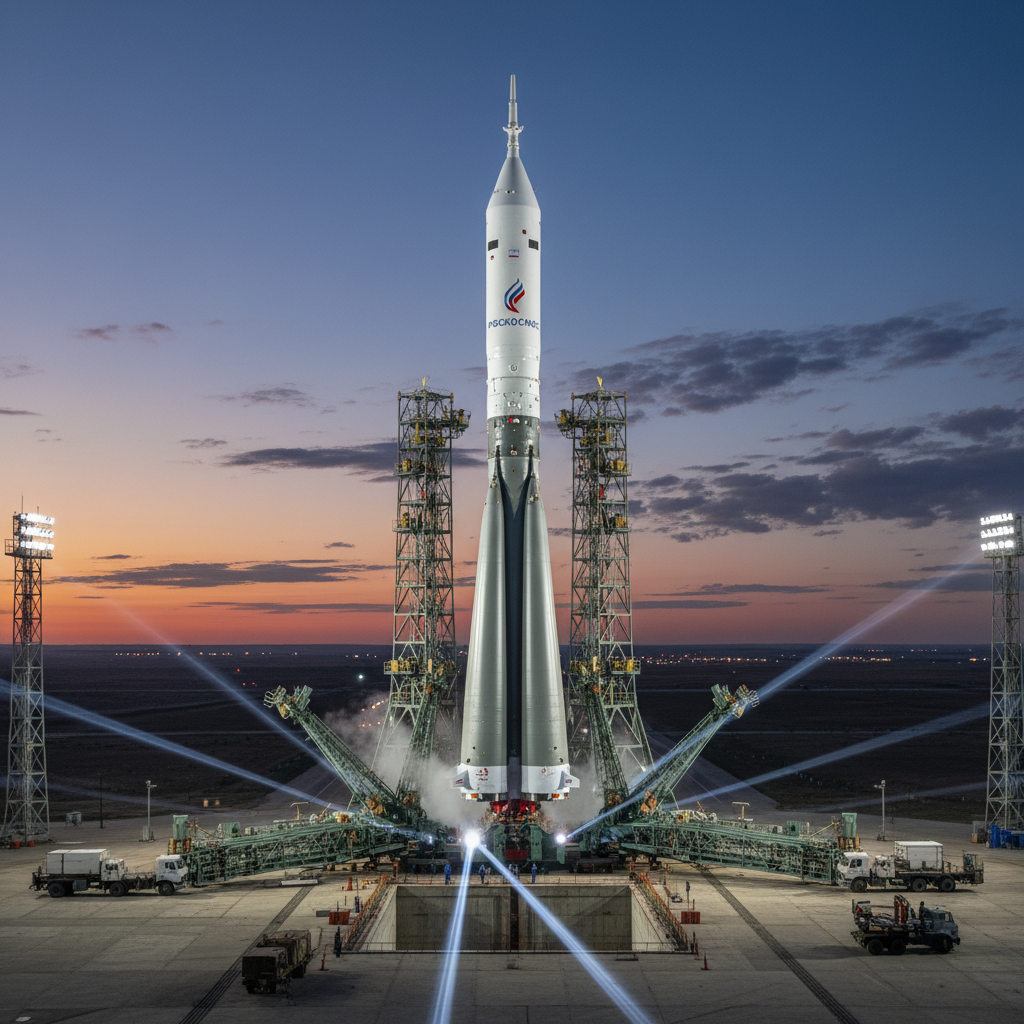
Russia will attempt to launch its newest rocket Soyuz-5 before the end of the year, head of Roscosmos Dmitry Bakanov has said in an interview with state news agency TASS.
“Yes, we are planning for December,” Bakanov said. “We are completing the preparations for the first flight, the assembly of the launch vehicle is in the final stages.” Soyuz-5 will take to the skies from the Baikonur cosmodrome in Kazakhstan. If successful, it would be the first test flight of a launcher that was conceptualized more than a decade ago. Roscosmos plans several trial flights but the vehicle is not expected to enter operational service until 2028 at the earliest.
While Soyuz-5’s mission profile and design are similar to previous vehicles in the Soyuz family, the rocket itself is not the result of an entirely new design. It is instead based on the Zenit-2 rocket, a design created by the Ukrainian Yuzhnoye Design Bureau in the 1980s. Zenit rockets were manufactured in Ukraine but they relied on engines from the Russian RD-171 family, creating a uniquely post-Soviet Russo-Ukrainian collaboration in aerospace. All that ended, as we know, when Russia invaded Ukraine in 2022. In the autumn of 2023, Russia even carried out a strike on the plant where Zenit rockets were assembled.
Soyuz-5 is a domestic clone of Zenit, albeit a larger one. The redesign was necessary to sever Ukraine from the program’s supply chain and make sure all vital components of the rocket are sourced from Russia. For Moscow, that shift is significant. It is not only an end to a long era of dependency, it also means an end to the aging Proton-M launcher.
Soyuz-5 in the Crosshair
In technical terms, Soyuz-5 is a medium-lift rocket. It can place around 17 metric tons into low-Earth orbit, a performance it can achieve because of slightly upsized propellant tanks relative to Zenit. But at the heart of the vehicle is a familiar engine: the RD-171MV, the latest in a long line of rocket engines.
The engine has its roots in the Energia program from the 1980s, which powered the Soviet Union’s ill-fated space shuttle Buran. The newest RD-171MV is significant because of one thing: It contains no Ukrainian parts. Burning kerosene and liquid oxygen as propellants, the engine generates more than three times the thrust of NASA’s Space Shuttle main engine and is the most powerful liquid-fueled rocket engine currently in operation.
Despite that, Soyuz-5 itself is an expendable rocket. By contrast, many of its competitors, most notably SpaceX’s Falcon 9, are built around reusability. That, and its roots in an earlier generation of technology, make it difficult to imagine Soyuz-5 ever capturing a significant portion of the international launch market.
The rocket, however, plays an important part in Roscosmos’ plans. With war costs and international sanctions limiting available funding, the development of a completely new, reusable rocket has proven to be difficult. The Amur project, also known as Soyuz-7, was designed to bridge that gap. The rocket, with a reusable first stage and methane-fueled engines, was designed to be competitively priced and one day match SpaceX on cost. But a series of delays have pushed back its first flight to at least 2030.
For the time being, Soyuz-5 is a stopgap, and a necessary one. It will keep the Russian space program going into the future with designs that, while state of the art at the turn of the millennium, still look backwards to the Soviet era.
Commercially, the outlook is less certain. The global launch industry has evolved dramatically over the last decade, with SpaceX and Chinese providers offering low-cost and flexible alternatives. Russia has its Soyuz-2 line for crewed missions and the Angara family for heavier payloads, but neither have found a significant market abroad. It remains to be seen if Soyuz-5 can break that trend.
But the simple fact that Roscosmos is so close to launching Soyuz-5 is in itself a remarkable achievement. A successful test flight in December would prove that, despite sanctions and austerity budgets, Russia can still get new hardware to the launch pad.
Soyuz-5 will not be a game-changer in terms of rocket design. But, for Russia, it has significant political and industrial value. It is a bridge to the future and a step towards technological independence. Whether that future arrives with Amur, or another generation of rockets on the drawing board, remains to be seen.